
Glimr Dating App: Meet & Chat
InfiniteIntel LimitedLifestyle
4.02.95K Reviews
- Version
- 1.4.5
- Installs
- 500.00K
- Age Rating
- Mature 17+
Screenshots

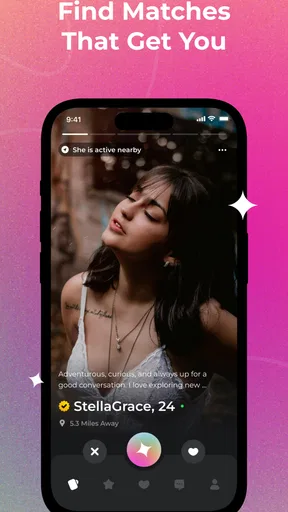
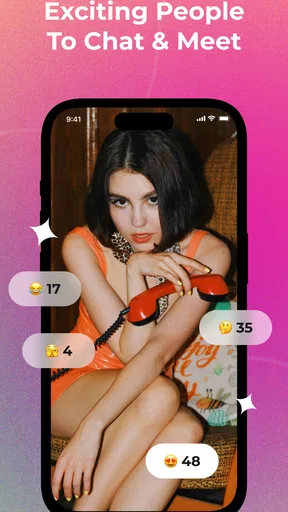
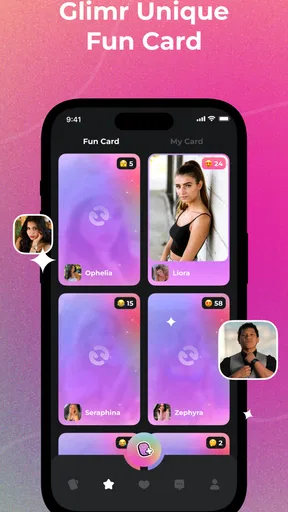
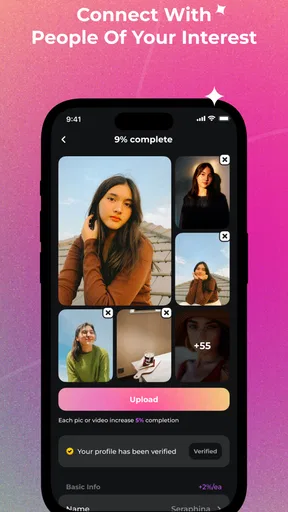
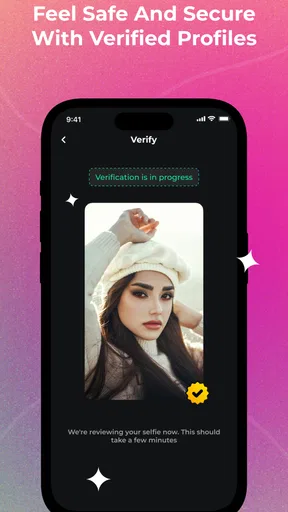
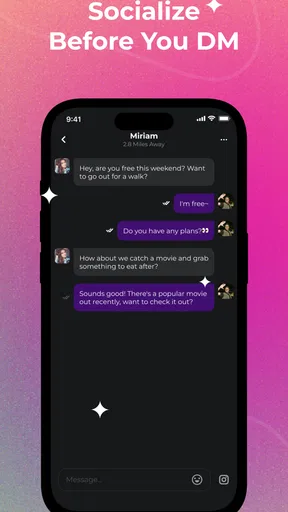
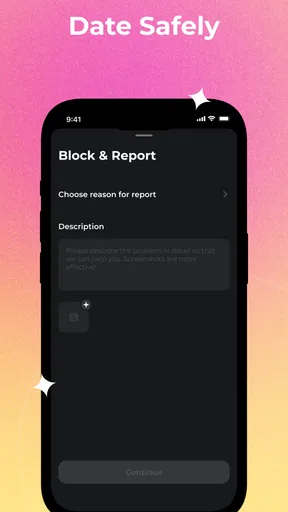
Our Review of Glimr Dating App: Meet & Chat
 Analysis by Appyee
I approached Glimr Dating App: Meet & Chat as a practical tool for meeting people nearby, not as a promise that every swipe will become a relationship. It is a free lifestyle app from InfiniteIntel Limited, aimed at adults who want to chat and discover genuine singles in their area. After using it, my impression is that its value depends less on browsing endlessly and more on how deliberately you set up your profile, handle conversations, and decide when to move from the app to a real meeting.
The app has a 4.2 average from around 21 thousand ratings, with more than 500 thousand installs. That gives it enough visibility to feel like a real dating community rather than an empty experiment, although the experience will still depend heavily on your location, age range, and the number of active people near you. It is rated Mature 17+, which fits the adult dating context, but I would still treat every conversation with normal online-dating caution.
How the everyday workflow feels
The basic routine is easy to understand. You create a dating presence, look through nearby profiles, decide which people interest you, and use chat to see whether there is enough common ground for a longer conversation. That sounds familiar because it is: Glimr sits alongside the usual location-based dating alternatives, where discovery is quick and the real work starts after two people show interest.
What I like about this approach is that it does not require a complicated learning period. Someone opening it for the first time can understand the purpose almost immediately. The useful question is not “How do I operate this?” but “How do I use it without turning dating into a repetitive scrolling habit?” My answer is to treat each session as a small task rather than an open-ended feed.
On a normal evening, I would first review a manageable group of profiles, pause on the ones that genuinely caught my attention, and then spend more time on the resulting conversations. That is more productive than approving people quickly and leaving several chats untouched. A dating app can give you plenty of possible contacts, but it cannot create interest where your messages are vague or your profile gives the other person nothing to respond to.
A realistic use case is someone who has recently moved to a new neighborhood and wants to meet people locally without committing to a formal event or a large social platform. Glimr can help that person start with low-pressure conversation. It is also useful for someone whose schedule makes spontaneous socializing difficult, because chatting lets them filter for shared interests and communication style before arranging a meeting.
At the same time, I would not choose it as my only option if I lived in a place with a small dating population or if I wanted a highly specialized matchmaking service. Nearby discovery is most useful when there are enough active users around you. If your priority is a very specific community, professional matchmaking, or detailed compatibility analysis, a more specialized alternative may suit you better.
Profile preparation matters more than fast browsing
The first practical lesson is to make your profile do some conversational work. A short, empty presentation forces every match to begin with the same tired question. Even without trying to sound polished, I would include a few concrete details about how I spend free time, what kind of connection I am open to, and one subject that makes an easy opening message possible.
This is one of the less obvious trade-offs in a fast dating app: adding more information can reduce the number of people who respond, but it can improve the quality of those responses. That is usually a good exchange. A profile that clearly shows your personality may discourage people looking for something completely different, saving time for both sides.
I also recommend checking how your words might sound to someone who has no context. Humor that works with friends can seem dismissive in a profile, while broad claims such as “I like everything” give a visitor no reason to start a conversation. A specific detail is more useful than a grand description. The goal is not to write an autobiography; it is to leave several natural doors open.
Settings and habits worth checking before you commit
The most important settings are the ones that control who you see and how much attention the app demands. Dating apps become frustrating when the discovery pool is too broad, the age range does not reflect your actual preferences, or the distance makes a future meeting unrealistic. I would begin with boundaries I could genuinely live with instead of selecting the widest possible audience and hoping the results become manageable later.
There is a useful distinction between a preference and a requirement. If I make every preference rigid, I may hide people who could be a good match. If I make everything loose, I create a large pile of conversations that are unlikely to go anywhere. I would use firm limits for issues that truly affect compatibility and remain flexible about less important details.
Location deserves particular thought. Someone in a dense city may be comfortable considering people slightly farther away, while someone in a rural area may need a wider radius for the app to feel active. However, a wider search area also increases the practical cost of dating: longer travel, more planning, and a greater chance that an interesting chat never becomes an in-person meeting. I would set the range based on where I would realistically go, not on curiosity alone.
Notifications are another setting worth treating as a tool rather than a default. Instant alerts can make the app feel lively, but they can also encourage checking every small update. I prefer a repeatable rhythm: review messages when I have enough time to answer properly, rather than opening a conversation while distracted and sending a rushed reply. The quality of attention matters more than being available every minute.
Because the app includes in-app purchases ranging from $0.99 to $499.99 per item, I would decide on a spending limit before experimenting with extras. The free entry point is helpful for trying the service, but optional purchases can make casual browsing feel more transactional. My advice is to use the core experience long enough to decide whether the local community and conversation quality are actually useful before paying for anything.
This is also where Glimr differs from some traditional dating alternatives. A paid matchmaking service may build its value around human guidance or detailed introductions, while a social network may offer a much broader way to meet people but less dating-focused intent. Glimr is closer to the direct, location-aware model: it puts discovery and chat in the same place, which is convenient, but it leaves more responsibility with you.
A simple routine that prevents the app from taking over
I found that a short, intentional session works better than constant browsing. Start by checking new profiles, then return to conversations that already show mutual effort. If a chat repeatedly produces one-word replies or long unexplained gaps, I would stop investing energy instead of trying to rescue it indefinitely. Dating apps reward curiosity, but they also reward knowing when a conversation has reached its natural end.
One practical shortcut is to prepare a few genuine opening themes rather than copying one message to everyone. For example, I might refer to a hobby, a place, or a detail in the person’s presentation and follow it with a question that cannot be answered with only “yes” or “no.” This makes the message feel personal without requiring a long introduction.
A second useful pattern is to move from surface questions to shared expectations gradually. Start with interests and daily routines, then discuss what each person is hoping to find when the conversation feels comfortable. Asking about intentions immediately can feel abrupt, but avoiding the subject for too long can waste time. I would look for the middle ground: clear enough to prevent confusion, relaxed enough to keep the exchange natural.
A third habit is to review your own profile after a few conversations. If several people ask the same basic question, that may reveal a detail worth adding. If conversations repeatedly stop at the same point, the problem may be the app’s local activity, but it may also be that your profile or opening messages are not giving enough substance. This small feedback loop is more useful than simply increasing the number of profiles you view.
Experienced users can also separate discovery time from conversation time. Browsing while trying to answer messages encourages shallow decisions and makes the app feel like work. I would use one session to find promising profiles and another to write thoughtful replies. That separation is a simple workflow improvement, but it makes the service feel calmer and helps prevent a large unread-chat backlog.
Where the experience has real limits
Glimr cannot remove the basic uncertainty of online dating. A profile is a selective presentation, and a pleasant chat does not guarantee an equally comfortable meeting. I would avoid treating early messages as proof of trust. Keep personal information limited at first, watch for pressure or inconsistent stories, and arrange a first meeting in a public place where leaving is easy.
The Mature 17+ rating is an important reminder that this is not a general social app for younger users. Adults should still set their own boundaries around photos, personal details, and the pace of conversation. If someone pushes you to share more than you want, requests money, or tries to move you into an uncomfortable situation, ending the exchange is more important than preserving a match.
Another limitation is that nearby dating depends on local momentum. A strong overall install figure does not guarantee a busy experience in every town. You may see repeated profiles, fewer active conversations, or people who live close enough to appear relevant but far enough away to make regular meetings difficult. This is a situation where using a second dating service at the same time may be more sensible than expecting one app to cover every possibility.
The purchase structure also deserves restraint. Free access lowers the barrier to trying Glimr, but the broad range of optional item prices means users should not assume every paid choice will improve their results. More visibility or additional convenience may help some people, yet no purchase can fix an unclear profile, weak communication, or a poor local user pool. I would only spend when I understand exactly what I am buying and why it fits my current goal.
Version 1.4.1 shows that the app is still receiving product development, and the minimum operating-system requirement is Android 7.1. That makes it accessible to many older Android devices, although compatibility alone should not be confused with a guarantee that every phone will feel equally smooth. If your device is old or storage is tight, I would keep the app updated when possible and pay attention to how reliably messages and notifications behave.
Privacy is another reason to use a measured workflow. Dating requires enough information to establish trust, but not enough to expose your entire life to a stranger. I would avoid listing a precise home address, workplace details that make me easy to locate, or a predictable daily schedule. Share broader interests first, then add personal context only as trust develops.
Who should use it, and who should choose something else?
I think Glimr is a good fit for adults who want a straightforward way to meet nearby singles, prefer chatting before making plans, and are willing to manage their own boundaries. It is especially practical for people who want a lighter, more direct experience than a large social network. The free starting point also makes it reasonable to test whether the local community is active before making a commitment.
I would be more cautious about recommending it to someone who dislikes app-based discovery, wants professional matchmaking, or expects every profile to be deeply verified for them. It is also not ideal for a person who tends to spend impulsively on dating features or who finds repeated browsing stressful. In those cases, a smaller service with more structured introductions, or offline groups built around shared interests, may produce a healthier experience.
Compared with the usual swipe-focused alternatives, Glimr’s appeal is its uncomplicated combination of local discovery and conversation. Its weakness is the same simplicity: you must do more of the filtering, safety checking, and expectation setting yourself. Compared with meeting people through friends or activities, it offers more immediate reach but less built-in social accountability. Neither approach is universally better; the right choice depends on whether you value speed and range or context and familiarity.
My verdict after using it deliberately
The best way to use Glimr is as a focused conversation tool, not an endless profile treadmill. Set a realistic search area, present enough of yourself to invite meaningful replies, and give priority to people who show consistent interest. Those habits make a bigger difference than simply increasing the number of profiles you view.
InfiniteIntel Limited has positioned this as an accessible lifestyle app for adult dating, and the result is easy to approach. The free price makes a trial uncomplicated, while the established rating and user base suggest that it has found an audience. Still, the experience is not equally strong for everyone: local activity, personal communication style, safety awareness, and spending discipline all shape the outcome.
My final recommendation is positive, with clear conditions. I would suggest trying it if you want nearby conversations and are comfortable taking responsibility for the pace and quality of your dating experience. I would skip it as a primary option if you need specialized matchmaking, a very large local community, or a service that handles more of the screening for you. Used with sensible settings, a limited routine, and realistic expectations, Glimr Dating App: Meet & Chat can be a useful starting point for real-world connections rather than just another app competing for your attention.
Privacy and Permissions
See what permissions an app requests and how it handles your data.
- Identity
- add or remove accounts
- Location
- approximate location (network-based), precise location (GPS and network-based), access extra location provider commands
- Phone
- read phone status and identity
- Photos/Media/Files
- read the contents of your USB storage, modify or delete the contents of your USB storage
- Storage
- read the contents of your USB storage, modify or delete the contents of your USB storage
- Camera
- take pictures and videos
- Microphone
- record audio
- Wi-Fi connection information
- view Wi-Fi connections
- Device ID & call information
- read phone status and identity
- Other
- view network connections, pair with Bluetooth devices, access Bluetooth settings, connect and disconnect from Wi-Fi, full network access, close other apps, change your audio settings, run at startup, reorder running apps, control vibration, prevent device from sleeping
Verdict
Strengths of Glimr Dating App: Meet & Chat
- Quick sign-up makes it easy to start browsing profiles.
- Clean interface keeps matching and messaging simple.
- Useful filters help narrow down potential matches.
- Chat features support getting to know matches before meeting.
- Location-based discovery can surface people nearby.
Limitations of Glimr Dating App: Meet & Chat
- The quality and number of matches may vary by location.
- Some useful features may require a paid subscription.
- Dating profiles can contain incomplete or outdated information.
- Notifications may become distracting during active conversations.
- Users should remain cautious about scams and misleading profiles.
Similar Picks in This Category
View All
SmartThings
Samsung Electronics Co., Ltd.4.6

Google Home
Google LLC4.0

Pinterest4.2

Astrotalk - Talk to Astrologer
Astrology & Horoscope4.7

My Verizon
Verizon Consumer Group4.5

Samsung Wallet (Samsung Pay)
Samsung Electronics Co., Ltd.4.1
Frequently Asked Questions
What is Glimr Dating App: Meet & Chat, and how does it work?
Glimr Dating App: Meet & Chat is designed to help people discover potential matches, view profiles, and start conversations online. After creating an account, you can generally add personal details, upload photos, set preferences, and browse suggested users. Matching and messaging features may depend on mutual interest, account settings, and the options available in your location.
Is Glimr Dating App: Meet & Chat free to download and use?
The app may be free to download, but some features can require payment or a subscription. Basic functions such as profile creation and browsing may be available without charge, while enhanced visibility, unlimited interactions, advanced filters, or other premium tools could be restricted. Check the app store listing and in-app pricing carefully before confirming any purchase.
Does Glimr Dating App protect my privacy and personal information?
Before joining, review Glimr’s privacy policy and the permissions requested by the application. Dating profiles can contain sensitive information, including photos, location details, age, and personal preferences. Avoid sharing financial information, passwords, exact home or work addresses, or other private details with strangers. Also check your visibility and notification settings so you understand what other users can see.
Can I chat safely with people I meet on Glimr?
You can use the chat feature to get to know potential matches, but online dating always requires caution. Keep early conversations inside the app, look for consistent and genuine behavior, and be careful with users who quickly request money, personal documents, or links to unfamiliar websites. If you decide to meet someone, choose a public place and tell a trusted person about your plans.
What should I do if I encounter a fake profile, harassment, or inappropriate behavior?
If a user behaves suspiciously, sends unwanted content, or violates the app’s community rules, stop communicating and use the available block and report tools. Save relevant evidence, such as messages or profile details, if you need to submit a report. Never feel pressured to continue a conversation, and contact local authorities if you believe there is an immediate threat or serious criminal activity.
